Put Down The Screen, Apple
Why I think Apple needs to get back on stage.
A lot has been written about Apple’s pre-recorded events. Plenty have called for Apple to bring back the old-style, live, in-person events.
I dearly miss them. After watching another rather lifeless pre-recorded video keynote from Apple this week, that feeling has turned into a sharp, aching pang.
The last traditional in-person Apple product keynote was on the 10th of September 2019, when Apple unveiled the iPhone 11 at the Steve Jobs Theater. Then the pandemic hit. Out of necessity, Apple announced that WWDC 2020 would be held entirely online. Apple pivoted to the live-streamed pre-recorded keynote, and Apple has stuck with that format since.
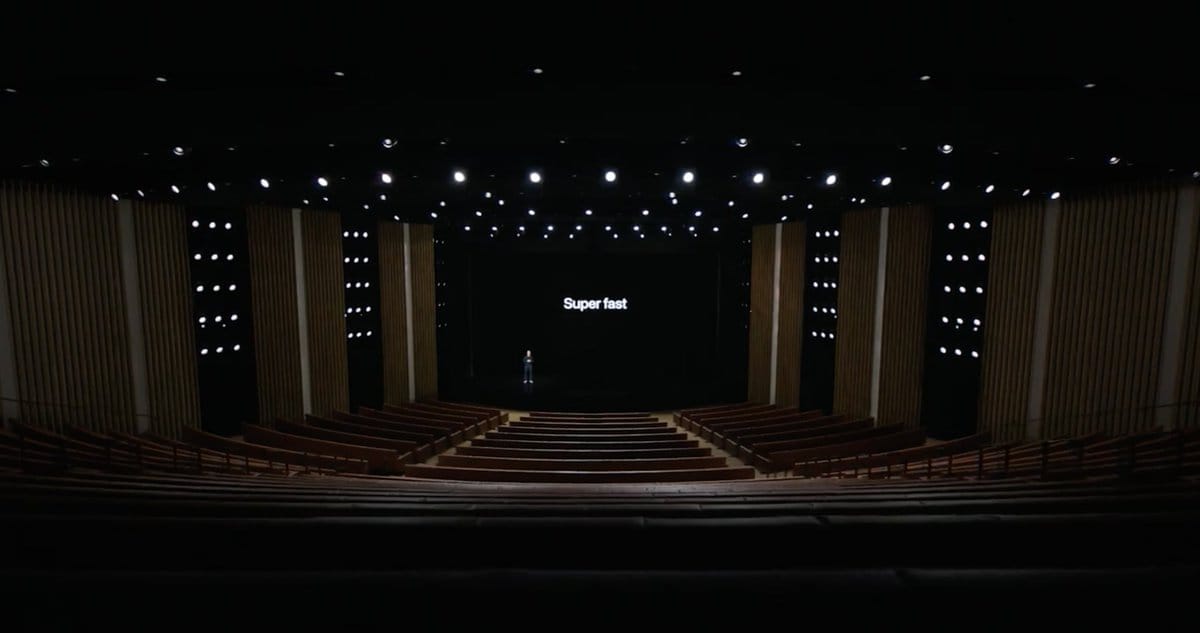
Apple has brought people back to Apple Park — WWDC22 brought developers and journalists back to watch the pre-recorded keynote together, and Apple has repeated this same ‘hybrid’ format each year since. At the MacBook Neo launch in March 2026, John Ternus appeared onstage at an invite-only event in New York (there was no public livestream). He appeared again on stage at Apple's September "Surprise and Shine” event, to preside over the live-streamed pre-recorded video keynote, in front of an audience at the Steve Jobs Theatre.
When the pandemic hit, I had to switch to working entirely from home. I got used to not commuting. I got used to largely seeing colleagues on a screen. By the time Covid-19 was no longer classified as a global public health emergency, I was pretty institutionalised in my ways. I really didn’t want to go back fully out into the world to be honest. There was a lot of resistance — an internal kicking and screaming.
Today, I am back out in the world; I sit in rooms with other human beings and have conversations that aren’t mediated by a webcam and a screen. But I also work from home significantly more than I did before the pandemic; I see people in person far less than I did, and I even talk on the phone far less.
In truth, I like working from home more. I really, really like my screens. I also really like being able to meet with someone online, without having to get on public transport and traipse across London each time. But there is undeniably something different, something more vulnerable, about actually being physically present with people that you don’t get through a screen. It’s less ‘safe', yes, but creativity often happens when we step outside our comfort zone. By sticking to the pre-recorded keynote format, I’m not sure Apple has fully left their comfort zone. I suspect the reason for this is a reflection of something that's happened in society more broadly: a retreat into ‘safety’.
The major WWDC and September product keynotes are essentially highly produced and polished films. Apple controls every frame. Craig Federighi can seemingly skydive out of a plane. Products can be filmed from whatever angle the director wants. A drone can swoop around Apple Park. Nothing has to go wrong because nothing is happening that can’t be edited.
The pre-recorded format is safe. Apple knows exactly what it’s going to get, we know what we’re going to get. That’s what bothers me about it. Apple has always had a bit of the pirate about it — a willingness to take risks, and occasionally make a mess of things. In my first post on this site I wrote about Jobs telling the original Macintosh team, “It’s better to be a pirate than join the navy.”
The Navy is organised. Regimented. There’s a procedure for everything. The modern Apple pre-recorded keynote (and, indeed, the modern Apple) is closer to the Navy. It is incredibly competent, controlled, safe. The old Apple keynotes were carefully scripted and crafted, obviously, but there was always the possibility that something might happen that wasn’t in the script, because Apple couldn’t fully control how the presentations would go, or how the audience would react.
There’s a difference between watching your favourite band live on stage and watching them appear in a carefully produced music video. When someone is performing live on stage, the audience is part of that performance. The applause, the occasional gasp — there’s a feedback loop. Something happens in the room, the presenter responds, and suddenly something is happening that wasn’t in the script. Think back to 2019, when John Ternus, live onstage, unveiled the Pro Display XDR. There was an incredulous gasp from the audience when he revealed that the optional stand would cost an eye watering $999, and it visibly knocked Ternus off his stride. Think of 2015, when Phil Schiller introduced the Apple Pencil at a live iPad Pro event — when he uttered the words “Apple Pencil”, the audience laughed at the name.
Perhaps what I really miss about the onstage events is Steve Jobs. Those keynotes were fundamentally about his charisma and timing. He had an extraordinary ability to stand in front of a live audience and talk as though he honestly didn’t give a shit whether you liked him or not. He also had a capacity to make a product announcement feel like something very important (even magical) was happening in the world (think back to his reveal that the iPod Nano could fit in your jeans’ coin pocket, or in 2008 when Jobs used an ordinary office envelope to demonstrate how thin the new MacBook Air was).
Jobs also had a number of very memorable, human reactions when things went wrong onstage. There was the 2010 iPhone 4 launch demo when Jobs had to ask the audience to turn off their WiFi and put their laptops down, after he was struggling to get a connection; or 2001 Macworld in New York, when Jobs lost his temper after a demo went wrong, tossing a digital camera off stage. In the world of the pre-recorded keynote, none of this can happen. And by eliminating the possibility of failure, Apple has inadvertently eliminated the possibility of magic.
The old live keynotes were of course carefully controlled — Jobs was notorious for gruelling, obsessive rehearsals beforehand [1]. But however rehearsed Jobs was, he still had to stand in a room with people who weren't rehearsed. I want to see Apple jam on stage again, even if some of the tunes go wrong. There is something wonderfully human about watching an executive walk onto a stage, exposed under the glare of a spotlight. It introduces uncertainty and vulnerability. The pre-recorded format has introduced sterility.
And Apple does have people who can light up a stage. Craig Federighi is self-deprecating, slightly awkward, funny, and nimble on his feet (in 2017 at the Steve Jobs Theatre, he demonstrated Face ID on stage — it didn’t work and he couldn’t unlock the phone — he handled the whole thing very well). Joz is always entertaining. John Ternus can be an engaging communicator. He is now the captain of the ship — I’d like to see him out on deck, leading from the front.
One more thing…
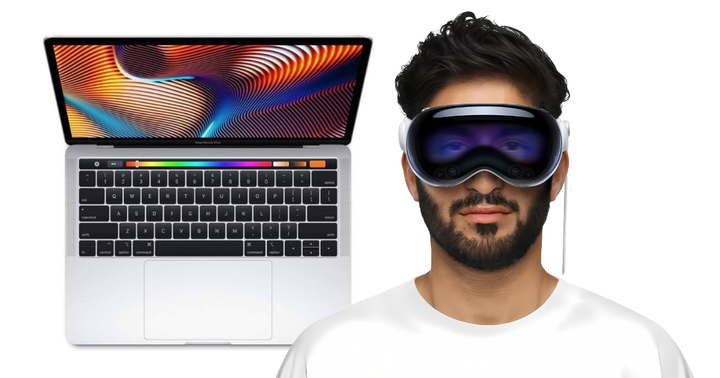
By May 2023, the world was finally starting to emerge from the pandemic. A month later, on the 5th of June, Apple unveiled the Vision Pro at WWDC, via a pre-recorded keynote. Of all the products Apple could have unveiled at that particular moment, it chose to show us a product whose entire purpose was to wrap an immersive digital bubble around our vision. As a metaphor for the moment we had been living through, it was almost absurd — after over 3 years of people staring at screens and meeting one another through webcams, people were finally starting to rub their eyes, crawl out of their caves and come back into the world. And Apple said: here’s a screen you can strap onto your face.
Apple, of all companies, should understand that there's a difference between a screen that helps you connect and a screen that lets you avoid the risk of connecting altogether. Right now, Apple's biggest stage is doing the second thing, not the first.
During Tim Cook’s tenure as CEO of Apple, he repeatedly stressed the importance of human connection. Many times he told us:
“If I’m looking at the device more than I’m looking into someone’s eyes, I’m doing the wrong thing”.
Come back on stage again, Apple. We want you to look into our eyes again.
In their book, Becoming Steve Jobs, Brent Schlender and Rick Tetzeli describe Jobs going over material "endlessly and fastidiously”, sometimes alone on an empty stage the night before a Macworld keynote. ↩︎